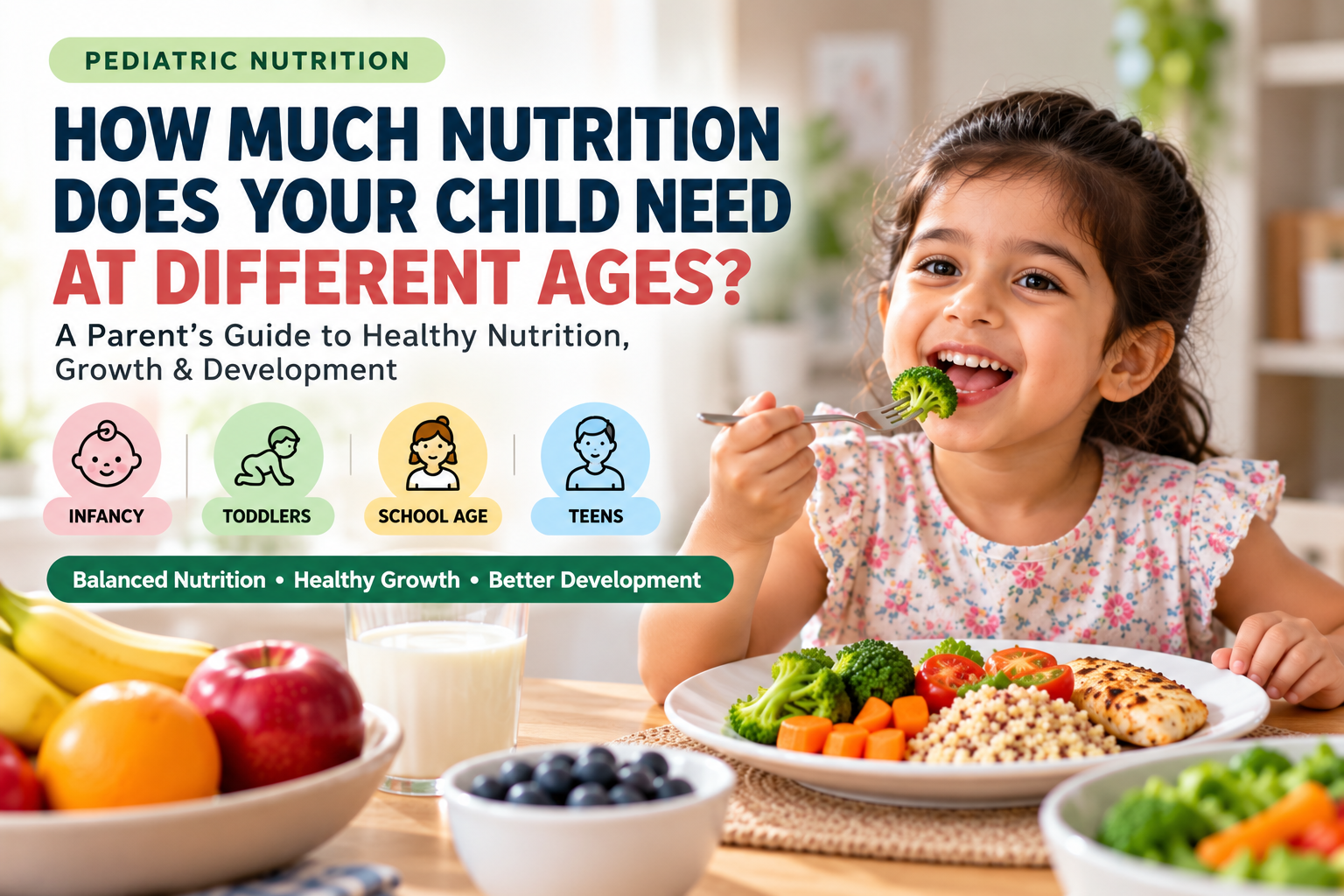
How Much Nutrition Does Your Child Need at Different Ages?
Good nutrition is an important part of a child's growth, development and overall health. As children grow from infancy to adolescence, their nutritional requirements change according to their age, activity level and individual needs.
Parents often wonder whether their child is eating enough, getting the right nutrients or following a balanced diet. Understanding basic pediatric nutrition can help parents make informed choices about everyday meals.
Nutrition needs can vary from one child to another. If you have concerns about your child's diet, growth or weight, discussing them with a pediatrician can help identify the appropriate approach.
What Is Pediatric Nutrition?
Pediatric nutrition focuses on the nutritional needs of infants, children and adolescents during different stages of growth and development.
A balanced diet should provide children with adequate energy, protein, vitamins, minerals and other nutrients needed for normal growth and daily activities.
The exact nutritional requirements depend on factors such as age, growth, activity level, health status and individual dietary needs.
Why Is Nutrition Important for Children?
Childhood is a period of rapid physical and developmental change. Adequate nutrition supports normal growth, physical activity, learning and overall development.
Poor dietary intake or an unbalanced diet may contribute to nutritional deficiencies or unhealthy weight gain when persistent.
Nutrition is therefore an important part of routine pediatric healthcare.
Parents who have concerns about their child's diet, appetite or overall development can also discuss these concerns with a Pediatrician in Varanasi for an individual assessment.
Nutrition Needs During Infancy
Infancy is an important period of growth and development. During this stage, feeding should be appropriate for the child's age and developmental needs.
Parents should follow guidance from their pediatrician regarding feeding, introduction of complementary foods and appropriate nutrition for the individual child.
If parents have concerns about feeding, appetite or weight gain during infancy, pediatric consultation can help.
Nutrition for Toddlers
Toddlers are becoming more independent with eating and may sometimes become selective about food.
Parents can focus on offering a variety of nutritious foods rather than relying on a very limited selection of foods.
Meals can include suitable sources of protein, whole grains, fruits, vegetables and other nutrient-rich foods according to the child's dietary needs.
Persistent feeding difficulties or concerns about growth should be discussed with a pediatrician.
If you are concerned about your child's growth along with nutrition or feeding, you can also explore Growth Consultation in Varanasi for further guidance.
Nutrition for School-Age Children
School-age children need adequate nutrition to support growth, physical activity and everyday learning.
Parents can encourage regular meals and a varied diet that includes different food groups.
Healthy food choices can also be encouraged for school snacks and meals.
The goal should be to develop healthy eating habits rather than focusing only on the quantity of food.
Nutrition During Adolescence
Adolescence is another period of significant physical growth. Nutritional requirements may increase as the body develops.
Adolescents need a balanced diet that supports growth, activity and overall health.
Parents should also be aware of restrictive diets, skipped meals or other eating patterns that may affect nutritional intake.
Important Nutrients for Growing Children
Children need a variety of nutrients as part of a balanced diet.
Protein
Protein contributes to normal growth and development and is found in foods such as pulses, dairy products, eggs, meat, fish and other suitable sources.
Calcium
Calcium is important for developing bones and teeth. Appropriate dietary sources can contribute to meeting a child's nutritional requirements.
Iron
Iron is an important nutrient for children. If deficiency is suspected, parents should discuss testing and treatment with a healthcare professional.
You can also read more about Vitamin Deficiency in Children .
Vitamins and Minerals
A varied diet can provide many of the vitamins and minerals children need. Specific supplementation should be discussed with a healthcare professional when required.
Can Poor Nutrition Affect a Child's Growth?
Nutrition is one of several factors that can influence healthy growth.
Persistent nutritional problems may affect weight, growth and overall health. However, growth is influenced by several factors, including genetics, health and development.
If you are concerned about your child's growth, you can learn more about Growth Consultation in Varanasi .
Parents can also read: Child Growth Chart: Height, Weight & Age Guide .
Signs Your Child May Need Nutrition Guidance
Parents may consider discussing nutrition with a pediatrician if they notice persistent concerns such as:
- Poor appetite
- Very selective eating
- Poor weight gain
- Excessive weight gain
- Feeding difficulties
- Suspected nutritional deficiency
- Concerns about height or growth
Pediatric Nutrition in Varanasi
If you are concerned about your child's diet, weight, appetite or nutritional needs, a pediatric consultation can help assess the child's overall health.
Learn more about Pediatric Nutrition in Varanasi for information about nutrition-related pediatric care.
Parents can also explore the existing guide on Healthy Diet Plan for Children .
Can Poor Eating Habits Lead to Childhood Obesity?
Children's weight can be influenced by food intake, activity level, genetics and other factors.
Parents should focus on healthy eating habits and regular physical activity rather than using restrictive diets without professional guidance.
If you are concerned about your child's weight, you can learn more about Childhood Obesity .
Related Pediatric Health Blogs
- Healthy Diet Plan for Children
- Vitamin Deficiency in Children
- Child Growth Chart: Height, Weight & Age Guide
- Growth Consultation in Varanasi
- Growth Disorders in Children
Frequently Asked Questions
What is pediatric nutrition?
Pediatric nutrition focuses on meeting the nutritional requirements of infants, children and adolescents during different stages of growth and development.
Why is nutrition important for children?
Adequate nutrition supports healthy growth, development, physical activity and overall health.
How can I know if my child is getting enough nutrition?
A child's overall diet, growth, weight, development and health can help provide context. If parents are concerned, a pediatrician can assess the child's individual needs.
Can nutrition affect my child's height?
Nutrition is one factor involved in healthy growth. Height is also influenced by genetics, health and other factors.
When should I consult a pediatrician about nutrition?
Parents may consider consultation for persistent feeding difficulties, poor appetite, poor weight gain, excessive weight gain or concerns about nutritional deficiencies.
Conclusion
Children's nutritional needs change as they grow from infancy through adolescence. A balanced and varied diet can help support normal growth and development.
Every child is different, so nutrition should be considered alongside the child's age, growth pattern, health and individual needs.
If you have concerns about your child's diet, appetite, weight or growth, discuss them with a qualified pediatrician for appropriate guidance.
Looking for Pediatric Nutrition Guidance?
Consult Dr. Anubha Jain for pediatric nutrition, growth and child health concerns in Varanasi.
Book Consultation