
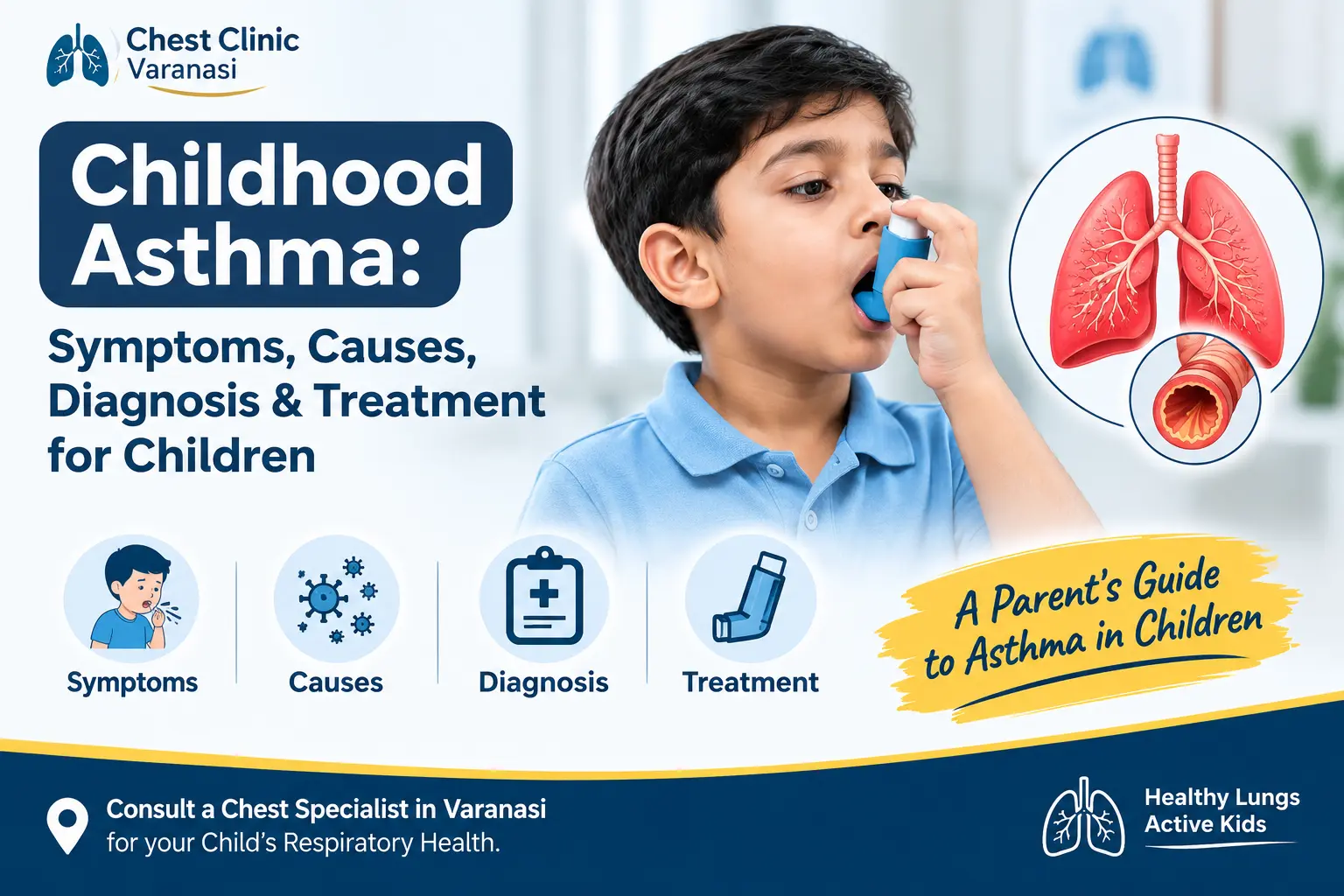
Childhood asthma is a respiratory condition that can cause repeated episodes of coughing, wheezing, chest tightness or difficulty breathing.
Asthma symptoms can vary considerably from one child to another. Some children may have symptoms mainly during exercise or respiratory infections, while others may experience symptoms more frequently.
Recognising recurring breathing symptoms and getting an appropriate medical evaluation can help parents understand what may be causing their child's symptoms and how they can be managed.
- What Is Childhood Asthma?
- Common Asthma Symptoms in Children
- Causes and Risk Factors
- How to Recognise an Asthma Flare-Up
- How Is Childhood Asthma Diagnosed?
- Childhood Asthma Treatment
- Inhalers and Asthma Medicines
- Asthma at School and During Activities
- How Parents Can Help
- When Should Parents See a Doctor?
- Frequently Asked Questions
What Is Childhood Asthma?
Asthma is a condition in which the airways can become inflamed and narrowed, making breathing more difficult.
In children, symptoms may come and go. A child may appear completely well between episodes and then develop coughing, wheezing or breathing difficulty during certain situations.
The pattern of symptoms is important when a doctor evaluates a child for possible asthma.
Common Asthma Symptoms in Children
Children with asthma may experience different combinations of symptoms.
Recurring Cough
A repeated cough, particularly at night, during exercise or with respiratory infections, may need evaluation.
Wheezing
A whistling sound while breathing can occur when the airways become narrowed.
Breathing Difficulty
Some children may complain that they cannot breathe comfortably or may appear unusually breathless during activity.
Chest Tightness
Older children may describe a feeling of pressure or tightness in the chest.
Symptoms can be mild, moderate or severe. A child's age and ability to describe symptoms should also be considered.
Causes and Risk Factors
There is no single cause of childhood asthma. A combination of genetic and environmental factors may contribute to the condition.
Some factors associated with asthma risk or symptoms may include:
- Family history of asthma or allergic conditions
- Exposure to tobacco smoke
- Air pollution
- Respiratory infections
- Allergens or environmental irritants
- Changes in temperature or weather
- Physical activity in some children
Not every child with one of these factors will develop asthma, and individual triggers can vary.
How to Recognise an Asthma Flare-Up
An asthma flare-up can involve a noticeable increase in breathing symptoms.
Parents may notice repeated coughing, wheezing, faster breathing, difficulty speaking normally because of breathlessness or a child struggling to participate in normal activities.
When Breathing Becomes Difficult
Severe breathing difficulty, rapidly worsening symptoms, difficulty speaking because of breathlessness, unusual drowsiness or a child appearing seriously unwell requires urgent medical attention.
How Is Childhood Asthma Diagnosed?
There is no single test that confirms asthma in every child.
A doctor may consider:
- The child's symptoms and when they occur
- Previous episodes of breathing difficulty
- Family and medical history
- Physical examination
- Response to appropriate treatment when clinically indicated
- Age-appropriate breathing tests when possible
The approach can differ depending on the child's age and ability to perform certain tests.
Keep a Symptom Record
Parents can note when coughing, wheezing or breathing difficulty occurs, what the child was doing at the time and whether there was a recent respiratory infection. This information can be useful during a medical consultation.
Childhood Asthma Treatment
Treatment depends on the child's symptoms, severity, age and individual medical assessment.
The goal is generally to control symptoms, reduce flare-ups and help the child participate in normal daily activities.
A healthcare professional may recommend medicines that are appropriate for the child's condition along with a plan for managing symptoms.
Follow the Prescribed Treatment Plan
Parents should give asthma medicines exactly as prescribed and should not change the dose or stop long-term treatment without discussing it with the child's healthcare professional.
Inhalers and Asthma Medicines
Inhaled medicines are commonly used in asthma management. The specific medicine and delivery device depend on the child's age, symptoms and medical needs.
Younger children may require a spacer or other device to help deliver inhaled medicine effectively.
Correct technique is important. Parents should ask their healthcare professional to demonstrate the appropriate technique for the child's prescribed device.
Learn more about asthma inhalers and their proper use.Asthma at School and During Physical Activity
Children with asthma can often participate in school activities and physical activity when their condition is appropriately managed.
Parents should communicate relevant medical information to school staff when appropriate and make sure the child's prescribed medicines and action plan are available according to medical advice and school policy.
If exercise repeatedly causes coughing, wheezing or breathing difficulty, the child should be evaluated rather than simply being restricted from all physical activity.
How Parents Can Help Manage Childhood Asthma
1. Understand the Child's Symptoms
Learn which symptoms usually appear and when they occur.
2. Follow the Medical Plan
Use prescribed medicines according to the doctor's instructions.
3. Reduce Known Irritants
Where possible, reduce exposure to smoke and other known environmental irritants that worsen the child's symptoms.
4. Keep Follow-Up Appointments
Regular review can help determine whether the child's asthma management needs to be adjusted.
5. Know When to Seek Urgent Help
Parents should know the warning signs of severe breathing difficulty and understand the emergency instructions provided by their healthcare professional.
When Should Parents See a Doctor?
A child should be evaluated if coughing, wheezing or breathing difficulty occurs repeatedly or starts interfering with sleep, school or physical activity.
Medical evaluation is particularly important when symptoms are becoming more frequent, severe or difficult to control.
Concerned About Your Child's Breathing?
Recurring cough, wheezing or breathing difficulty should not be ignored. A proper respiratory evaluation can help identify the cause of your child's symptoms.
Book AppointmentChildhood Asthma Care in Varanasi
Parents looking for a child asthma doctor in Varanasi can seek evaluation when a child has repeated episodes of cough, wheezing, breathing difficulty or other respiratory symptoms.
At Chest Clinic Varanasi, Dr. Kumar Utsav evaluates respiratory symptoms and helps determine when further investigation or specialist management may be appropriate.
Bring previous prescriptions, reports and details about the child's symptoms to the appointment if available.
Related Asthma Resources
Frequently Asked Questions
What are the symptoms of asthma in children?
Common symptoms can include recurring cough, wheezing, shortness of breath and chest tightness. Symptoms can vary between children.
What causes asthma in children?
Childhood asthma can be influenced by genetic and environmental factors. Different children can have different factors that contribute to their symptoms.
How is childhood asthma diagnosed?
Diagnosis is based on the child's symptoms, medical history, physical examination and age-appropriate testing when appropriate.
Can children with asthma play sports?
Many children with appropriately managed asthma can participate in physical activity and sports. Individual advice should come from the child's healthcare professional.
Can childhood asthma go away?
Asthma symptoms can change as a child grows, but parents should not assume that symptoms have permanently resolved without medical evaluation.
When should a child with asthma see a doctor?
Repeated cough, wheezing, breathing difficulty or symptoms that interfere with sleep, school or physical activity should be discussed with a healthcare professional.
Where can I consult a child asthma doctor in Varanasi?
Parents in Varanasi can consult Dr. Kumar Utsav at Chest Clinic Varanasi for evaluation of respiratory symptoms in children.
Conclusion
Childhood asthma can affect breathing, sleep, school activities and physical activity, but appropriate evaluation and management can help many children remain active and participate in daily life.
Recurring cough, wheezing or breathing difficulty should not be ignored. If your child repeatedly develops respiratory symptoms, consult a qualified healthcare professional for an appropriate evaluation.
The right diagnosis and an individual treatment plan can help parents understand their child's symptoms and manage asthma more effectively.