Air Pollution & Lung Health in Varanasi: How Rising AQI Is Affecting Your Breathing
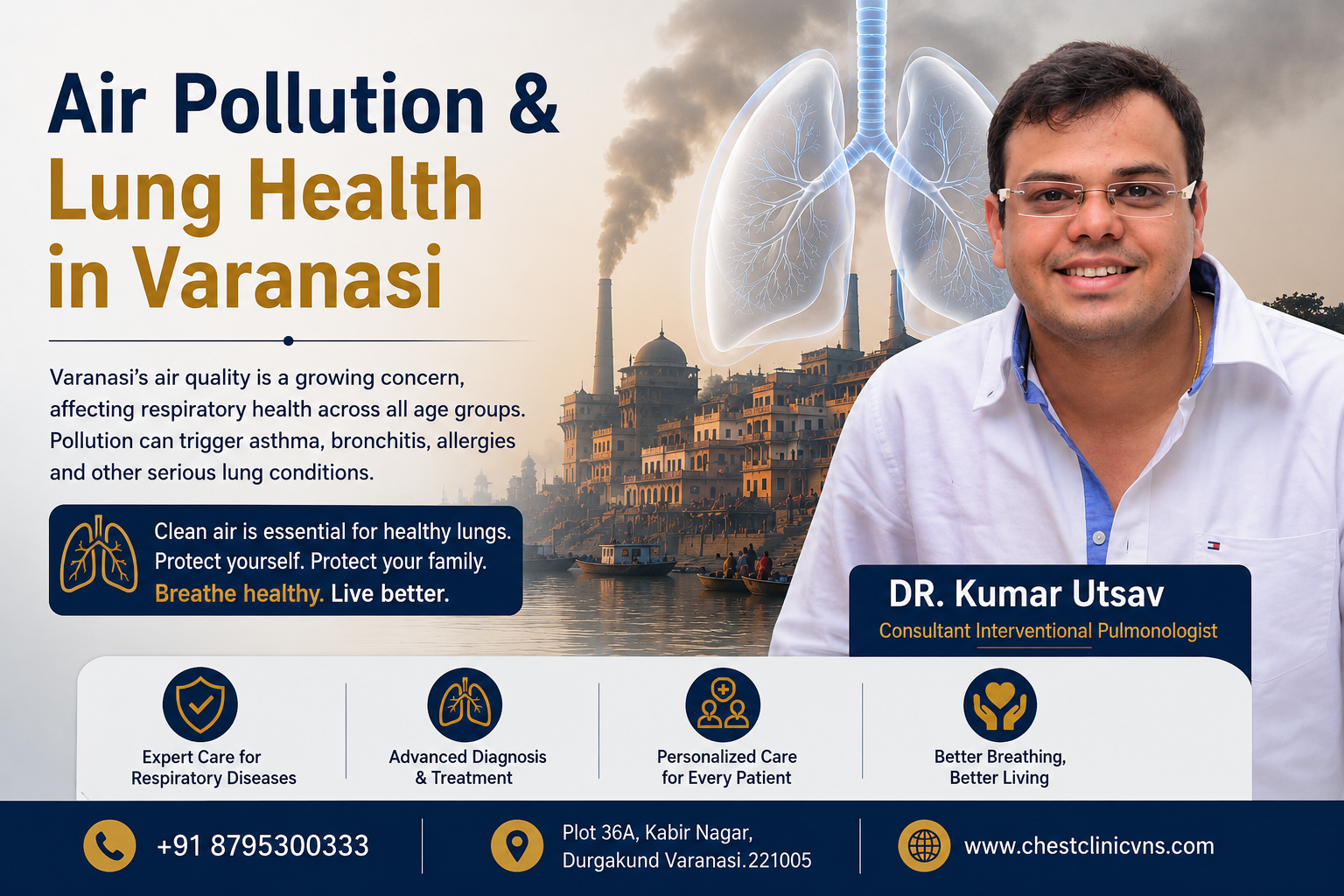
Varanasi's rising dust, vehicle smoke, and seasonal smog are silently damaging the lungs of thousands of residents. Every winter, our OPD sees a steady rise in patients with breathlessness, chronic cough, and wheezing linked directly to air quality. Narrow, congested lanes near the ghats, heavy traffic on major roads, ongoing construction dust, and crop-residue burning in nearby districts all combine to push Varanasi's Air Quality Index (AQI) into the "poor" and "very poor" categories for weeks at a stretch, especially between October and February.
If you're searching for a trusted chest doctor in Varanasi to understand or treat pollution-related breathing problems, this guide explains how air pollution affects your lungs, who is most at risk, and what you can do to protect your family.
At Samaria Multi-Speciality & Chest Centre, led by Dr. J.K. Samaria — Senior Consultant Pulmonologist and former Professor & Head of Chest Diseases at IMS BHU — we manage a growing number of patients every pollution season, from mild throat and airway irritation to serious asthma and COPD flare-ups.
Why Varanasi's Air Quality Affects Lungs So Much
Varanasi's geography and city layout make it particularly vulnerable to trapped pollution:
- Narrow, densely packed lanes near the ghats and old city trap vehicle and cooking smoke close to the ground
- Heavy traffic congestion on roads like Lanka, Sigra, and Cantt releases high levels of vehicle exhaust
- Ongoing construction and road-widening projects generate large amounts of fine dust (PM10 and PM2.5)
- Crop-residue burning in surrounding districts of Uttar Pradesh drifts smoke into the city, especially in winter
- Low wind speed and temperature inversion in winter — pollutants get trapped close to the ground instead of dispersing
- Diwali and festival firecrackers cause sharp short-term AQI spikes across the city
- Brick kilns and small industrial units on the outskirts add to the particulate load
This combination is why Varanasi frequently features among the more polluted cities in the Indo-Gangetic plain during winter months, and why our chest clinic at Durgakund sees a clear seasonal rise in pollution-related breathing complaints.
Main Pollutants Affecting Varanasi's Air
1. PM2.5 (Fine Particulate Matter)
Particles smaller than 2.5 microns that travel deep into the lungs and even enter the bloodstream. The single biggest driver of pollution-related lung and heart disease.
2. PM10 (Coarse Particulate Matter)
Larger dust particles from construction, unpaved roads, and vehicle movement. Irritates the nose, throat, and upper airway.
3. Nitrogen Dioxide (NO2)
Released mainly from vehicle exhaust; worsens asthma and reduces lung function with long-term exposure.
4. Sulphur Dioxide (SO2)
Produced by diesel vehicles, generators, and small industries; irritates the airway lining and worsens bronchitis.
5. Ground-Level Ozone
Formed when sunlight reacts with vehicle and industrial emissions; peaks in the afternoon and can trigger coughing and chest tightness, especially during outdoor exercise.
How Air Pollution Damages Your Lungs Over Time
| Exposure | Short-Term Effect | Long-Term Effect |
|---|---|---|
| Occasional high-AQI days | Eye/throat irritation, dry cough, mild breathlessness | Usually reversible with reduced exposure |
| Repeated seasonal exposure | Frequent cough, wheeze, reduced exercise tolerance | Higher risk of developing asthma or bronchitis |
| Years of high exposure | Recurrent chest infections, worsening COPD symptoms | Permanent reduction in lung capacity, higher cardiovascular risk |
Who Is Most at Risk From Varanasi's Air Pollution
- Children — lungs are still developing; higher breathing rate means greater pollutant intake relative to body size
- Elderly (60+) — reduced lung reserve and often existing heart or lung conditions
- Existing asthma and COPD patients — pollution is one of the most common triggers for flare-ups
- Pregnant women — pollution exposure has been linked to lower birth weight and preterm birth
- Outdoor workers — boatmen, priests at the ghats, traffic police, street vendors, and construction workers
- Commuters on two-wheelers — direct exposure to vehicle exhaust at close range
- Smokers — pollution adds to already-compromised airway defences
Symptoms to Watch For
- Persistent dry cough, especially worse in the morning or outdoors
- Wheezing or a whistling sound while breathing
- Chest tightness or heaviness
- Breathlessness during routine activity, like climbing stairs
- Frequent throat irritation, watery eyes, or sneezing
- Increased frequency of colds or chest infections during winter months
How We Diagnose Pollution-Related Lung Problems
1. Detailed History & Examination
We assess symptom pattern, occupational exposure, and timing in relation to AQI levels and season.
2. Pulmonary Function Test (Spirometry)
Measures how much air your lungs can hold and how quickly you can exhale — helps detect early airway narrowing before symptoms become severe.
3. Peak Flow Monitoring
Useful for asthma patients to track how their airways respond on high-pollution days.
4. Chest X-ray
Rules out infection or other lung changes in patients with persistent symptoms.
5. Allergy Assessment
For patients with associated sneezing, itchy eyes, or nasal symptoms, to distinguish pollution irritation from allergic rhinitis.
Treatment We Provide at Samaria Chest Centre
For Mild Irritation & Occasional Symptoms
- Saline nasal rinses and steam inhalation for throat/nasal irritation
- Advice on reducing outdoor exposure during high-AQI days
- Antihistamines if allergic symptoms are prominent
For Asthma & COPD Patients
- Step-up of inhaled controller therapy during high-pollution months
- Inhaler technique correction — a common reason for poor control during pollution season
- Nebulisation for acute flare-ups
- Personalised action plan for high-AQI days
For Recurrent Infections or Reduced Lung Function
- Targeted treatment based on pulmonary function test results
- Pulmonary rehabilitation exercises to improve breathing efficiency
- Regular follow-up spirometry to track lung function over time
Prevention Tips to Protect Your Lungs
Outdoors
- Check the daily AQI before planning outdoor exercise or activities
- Avoid jogging or heavy outdoor exercise when AQI is "poor" or worse — prefer early morning or indoor exercise instead
- Wear a well-fitted N95 mask on high-pollution days, especially while commuting
- Avoid burning garbage, leaves, or crop residue near your home
Indoors
- Use an air purifier with a HEPA filter in bedrooms, especially for children and elderly family members
- Keep windows closed during peak traffic hours and on high-AQI days; ventilate during cleaner periods
- Avoid indoor smoking and minimise use of incense/agarbatti in poorly ventilated rooms
- Add indoor plants known to improve air quality, though they work best alongside — not instead of — purifiers
For Asthma/COPD Patients
- Keep your reliever inhaler with you at all times during pollution season
- Don't skip your daily controller inhaler even if you're feeling well
- Get your annual flu shot and, if advised, the pneumococcal vaccine
- Discuss a written personal action plan with your pulmonologist for high-AQI days
Common Myths About Air Pollution — Debunked
| Myth | Reality |
|---|---|
| Pollution only affects people with existing lung disease | False. Long-term exposure can cause new breathing problems even in previously healthy people, especially children. |
| Cloth masks protect you from pollution | False. Ordinary cloth masks filter very little fine particulate matter; a well-fitted N95 mask is far more effective. |
| Indoor air is always cleaner than outdoor air | False. Without proper ventilation and filtration, indoor pollution from cooking smoke and incense can be just as harmful. |
| You'll always feel symptoms if pollution is affecting your lungs | False. Early lung function decline from pollution is often silent and only detected on a pulmonary function test. |
| Once winter ends, pollution-related lung damage reverses on its own | Partially true. Mild irritation often improves, but years of repeated high exposure can cause lasting reduction in lung capacity. |
Why Choose Samaria Chest Centre for Pollution-Related Lung Care
1. Expert Pulmonology Care
Dr. J.K. Samaria brings 30+ years of experience diagnosing and managing pollution-related airway disease, asthma, and COPD in Varanasi.
2. On-Site Pulmonary Function Testing
Spirometry and diagnostic facilities available in-house for fast, accurate assessment of your lung health.
3. Care for All Ages
From young children to elderly patients, our team including pediatrician Dr. Anubha Jain manages pollution-related breathing issues across every age group.
4. Personalised Action Plans
We help asthma and COPD patients prepare a clear, written plan for high-pollution days, reducing the risk of emergency flare-ups.
5. Convenient Durgakund Location
Located at Plot 36A, Kabir Nagar, Durgakund — easily accessible for patients from BHU, Lanka, Sigra, Bhelupur, and beyond.
Don't Let Polluted Air Silently Affect Your Lungs
Get a lung health check-up with an expert chest doctor in Varanasi before symptoms become serious.
📞 Call +91 8795300333 Book OnlineFrequently Asked Questions
1. Who is the best doctor in Varanasi for pollution-related breathing problems?
Dr. J.K. Samaria at Samaria Multi-Speciality & Chest Centre, Durgakund, is one of the most trusted chest specialists in Varanasi, with 30+ years of experience as former Professor & Head of Chest Diseases at IMS BHU.
2. Which season is worst for air pollution in Varanasi?
Winter, roughly October to February, tends to be the worst period due to low wind speed, temperature inversion, and crop-residue burning in nearby districts, which trap pollutants closer to the ground.
3. Can air pollution cause asthma in someone who never had it before?
Long-term exposure to fine particulate matter and traffic pollution can contribute to the development of asthma, particularly in children, even without a prior family history.
4. Do air purifiers actually help with outdoor pollution?
Yes, for indoor air. A good HEPA air purifier reduces indoor particulate levels significantly, but it does not protect you outdoors — an N95 mask is needed for that.
5. Is it safe for children to play outdoors during high-AQI days?
On "poor" or "very poor" AQI days, it's best to limit outdoor play, especially strenuous activity, and shift to indoor games instead.
6. How do I know if pollution is already affecting my lungs?
A pulmonary function test (spirometry) can detect early reduction in lung capacity, even before you notice significant symptoms. It's a quick, painless test available at our clinic.
7. My asthma gets worse every winter — is pollution the cause?
It's a common trigger. Winter pollution combined with cold air can significantly worsen asthma control. A personalised action plan and inhaler adjustment can help manage this seasonal pattern.
8. Are N95 masks necessary every day, or only on high-AQI days?
For most healthy individuals, masks are most useful on high-AQI days or during heavy traffic commuting. Asthma/COPD patients and outdoor workers may benefit from wearing them more regularly during pollution season.
9. Can diet help protect my lungs from pollution?
A diet rich in antioxidants — fruits, vegetables, nuts — along with adequate hydration supports overall respiratory health, though it does not replace medical treatment or protective measures.
10. When should I see a chest doctor for pollution-related symptoms?
If you have a persistent cough lasting more than 2-3 weeks, recurring breathlessness, wheezing, or if your existing asthma/COPD is getting harder to control during pollution season, it's time for an evaluation.
Visit the Best Chest Doctor in Varanasi for Lung Health Check-Ups
Whether it's a persistent cough, seasonal breathlessness, or a flare-up of existing asthma or COPD, Samaria Multi-Speciality & Chest Centre is here to help you and your family breathe easier despite Varanasi's changing air quality.
📍 Address: Plot 36A, Kabir Nagar, Durgakund, Varanasi-221005
📞 Phone: +91 8795300333
🕒 Hours: Mon: 9 AM-7 PM | Tue-Sat: 10 AM-7 PM | Sunday: Closed
🚨 24/7 Emergency: +91 8795300333
We welcome patients from across Varanasi — Durgakund, Lanka, BHU, Sigra, Bhelupur, Cantt, Bhojubeer, Sundarpur — and from neighbouring districts including Chandauli, Mirzapur, Ghazipur, Jaunpur, Bhadohi, and Azamgarh.

Dr. J.K. Samaria
Senior Consultant Pulmonologist | Professor & Head, Chest Diseases, IMS BHU. MD, FNCCP, FIACMS, FCAI, FICP. 30+ years treating asthma, COPD, TB, pollution-related lung disease, and complex lung conditions in Varanasi.